Request appointment

A practical pre-MOT checklist for visible driver checks

Use this guide for simple visible checks only. It does not predict an MOT result, replace maintenance or prove that a vehicle is safe to drive.

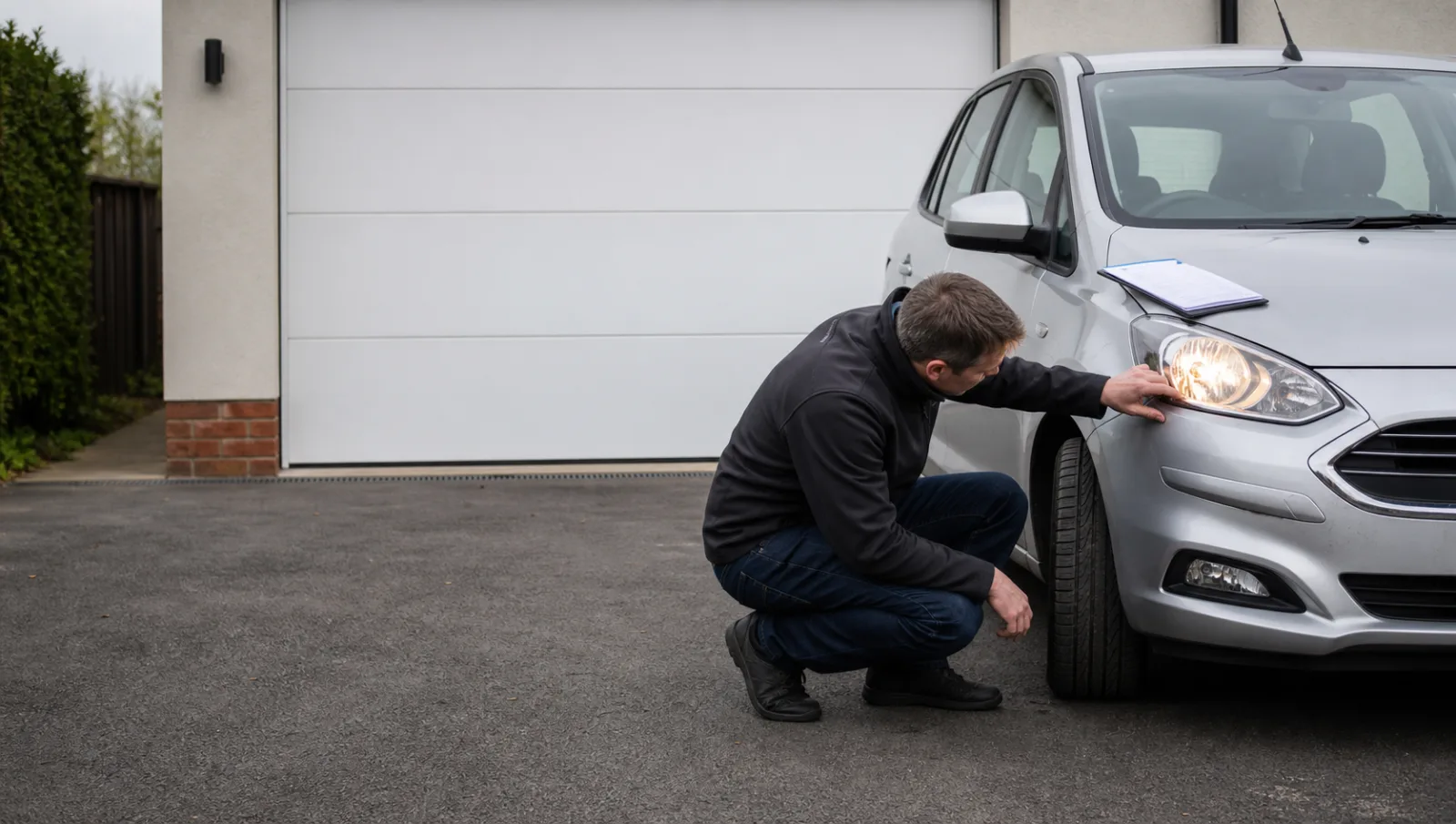
A driver checking a headlamp and tyre before an MOT.
Official checker

1 / Date and history

Check the official MOT status before choosing a date

Use the GOV.UK status service with the registration number. It is the right place to confirm whether a certificate is current and when it runs out; do not rely on an old reminder or a generic website estimate.

  • Confirm the registration is entered accurately.
  • Note the current expiry date and any recent result.
  • Choose an approved MOT test centre for the statutory test.
2 / Lamps and visibility

Check the lights you can operate and the view you need

Current GOV.UK material includes lamps, mirrors, windscreen condition, wipers and washers in the MOT inspection. Ask another person to help with rear lights rather than trying to observe them while controlling the car unsafely.

  • Headlamps, indicators, hazards, brake and position lamps.
  • Wipers and washers operating across a clear windscreen.
  • Mirrors secure and the driver's view free from obstruction.
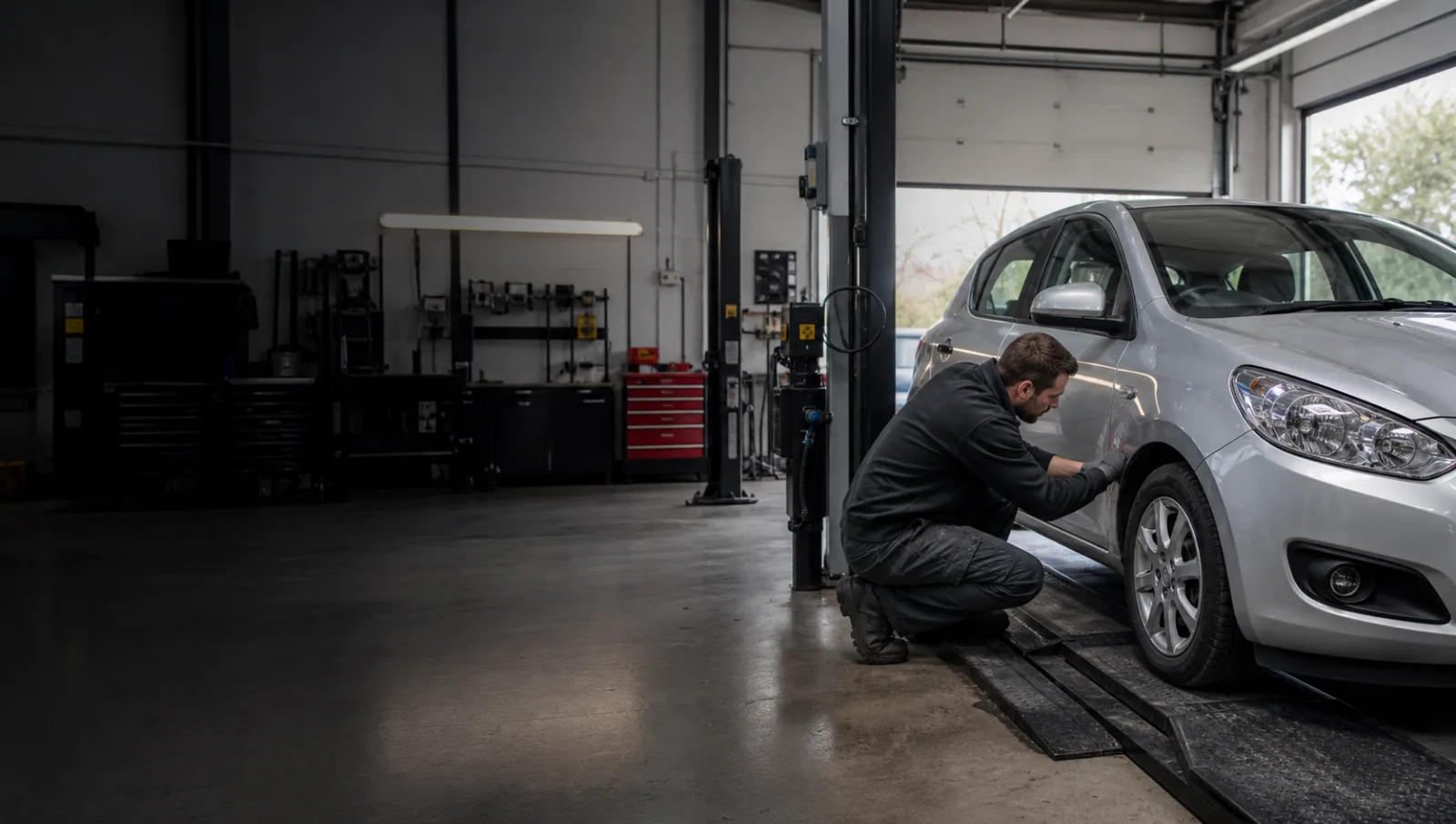
A mechanic inspecting a silver hatchback in a modern independent workshop.
Visible checks
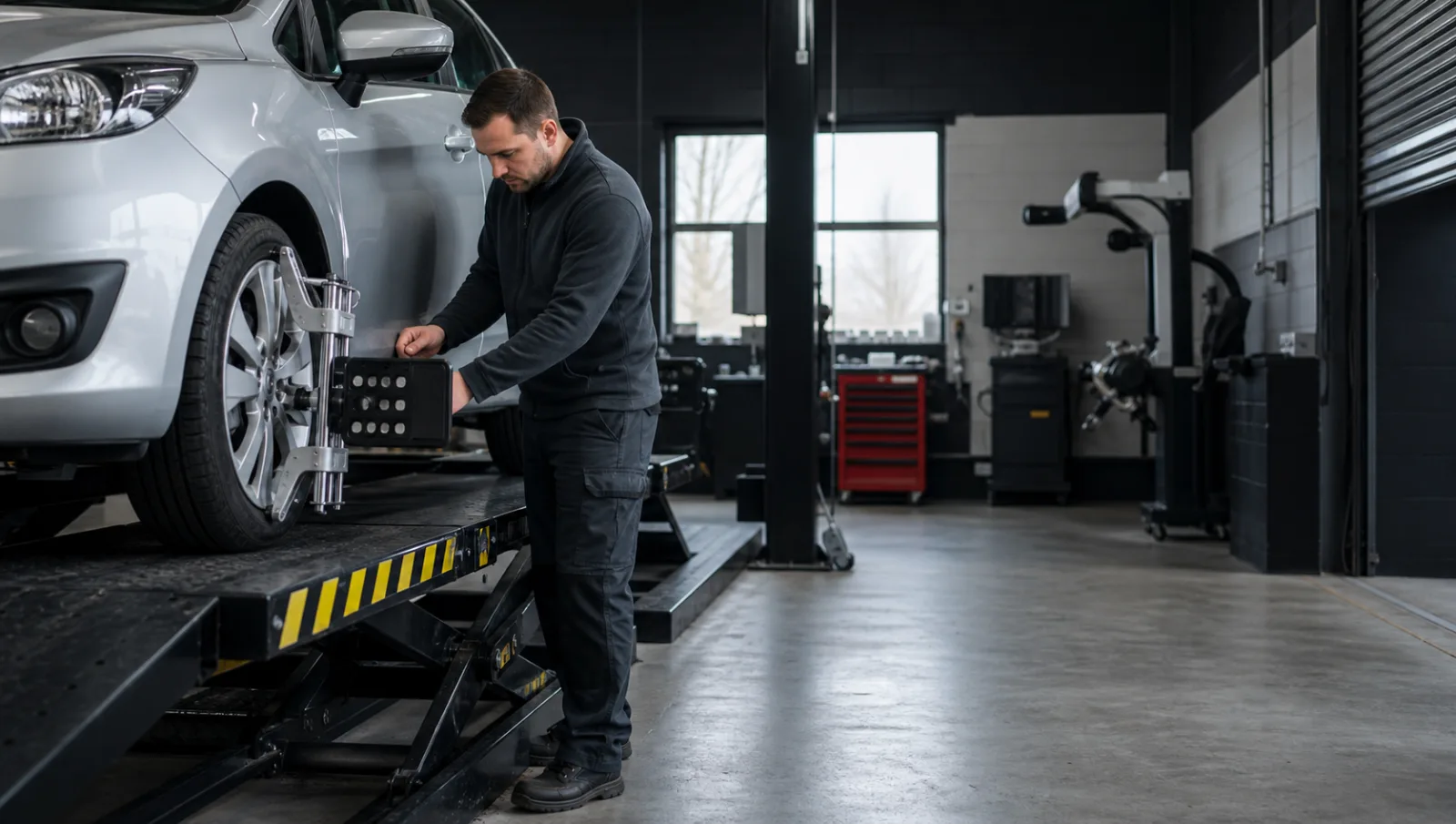
A mechanic setting wheel-alignment equipment on a silver car.
Stay above ground

3 / Tyres and wheels

Look for condition, damage and repeated pressure loss

Check each tyre when the vehicle is safely parked. Visible cuts, bulges, embedded objects or pronounced uneven wear need professional assessment; this guide does not ask you to crawl under the car or remove a wheel.

  • Inspect the accessible tread and sidewalls.
  • Check pressures against the vehicle information.
  • Mention recent pothole impact or alignment symptoms.

4 / Driver controls

Note warnings, horn, belts and obvious access problems

Do not erase dashboard warnings to make the vehicle look ready. Check that doors, seat belts and accessible controls operate as expected, and remove clutter that could obstruct inspection or the driver's view.

  • Record warning lights or messages exactly.
  • Check seat belts and doors without dismantling anything.
  • Make the registration plates visible and secure.
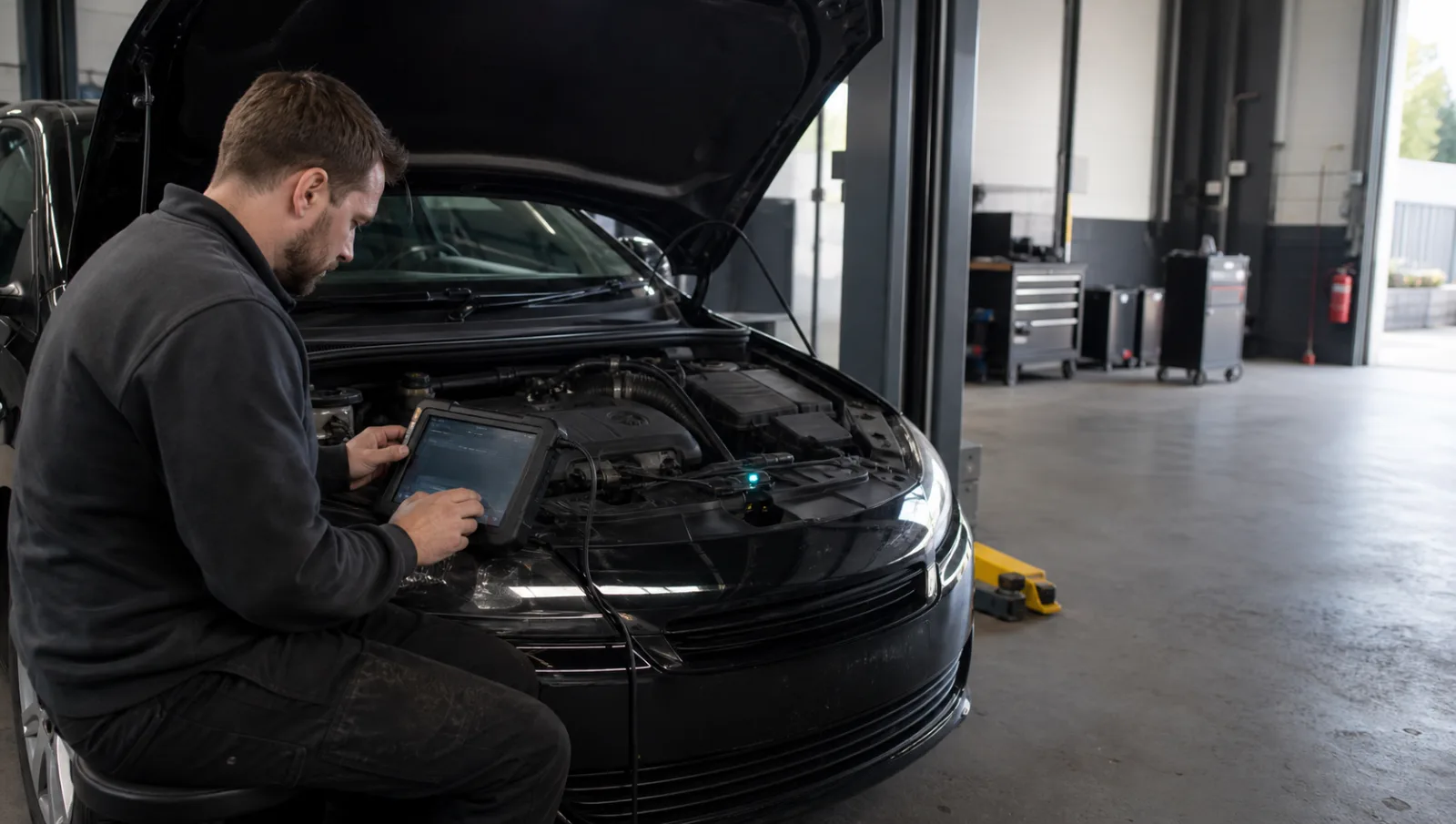
A mechanic connecting diagnostic equipment to a car with its bonnet open.
Do not hide faults
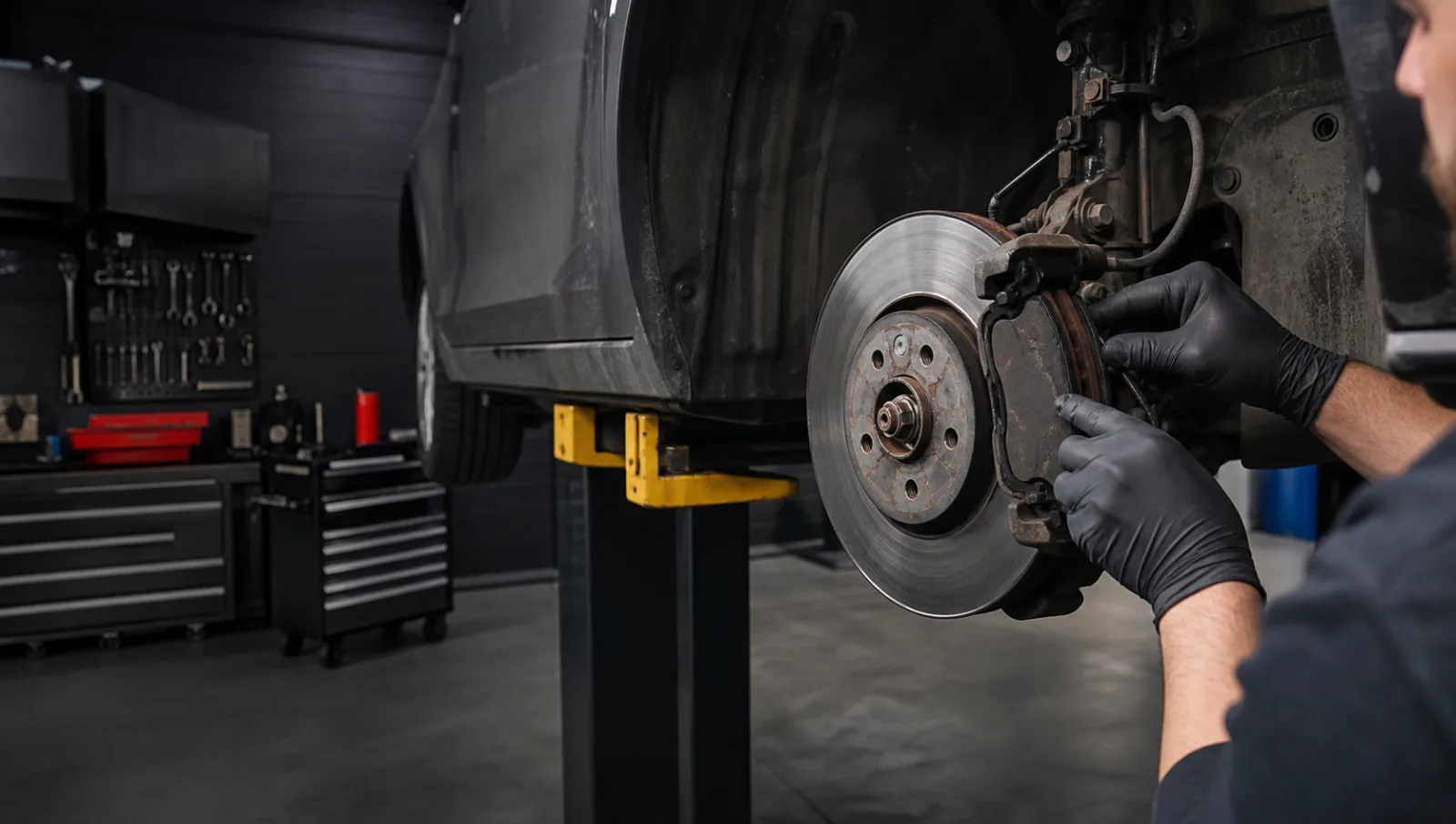
A mechanic inspecting a brake disc and caliper with the wheel removed.
Driver responsibility

5 / Safety boundary

A current MOT does not guarantee roadworthiness today

GOV.UK states that a vehicle can be unsafe even with a current MOT. If brakes, steering, tyres, visibility or another safety-critical system concerns you, stop using the vehicle and arrange appropriate professional help.

  • Do not use this checklist as a pass prediction.
  • Do not road-test a car that feels unsafe.
  • Use recovery or urgent help when the situation requires it.

Questions

Useful answers before the next step

Will this checklist tell me whether the car will pass?

No. It covers simple visible driver checks only. The statutory result comes from an approved test centre carrying out the full inspection.

Should I clear a dashboard warning before the MOT?

No. Record it accurately and arrange suitable assessment. Clearing information can make an intermittent fault harder to understand.

Can I check the brakes myself?

Only ordinary driver checks that can be completed safely. Do not dismantle components or road-test a vehicle that may be unsafe.

Where should I check current MOT rules?

Use GOV.UK and the current DVSA material linked from this page. Rules and inspection manuals can change.

What should I do if I find visible damage?

Photograph it safely, stop using the vehicle if roadworthiness is uncertain and contact an appropriate garage or recovery provider.

Next step

Prepare the details before requesting an appointment

Request an appointment