Request appointment

Brake inspection that starts with how the car feels

Braking symptoms need accurate context and a physical inspection. Note when the change appears, avoid naming the failed part too early and stop driving if control feels compromised.

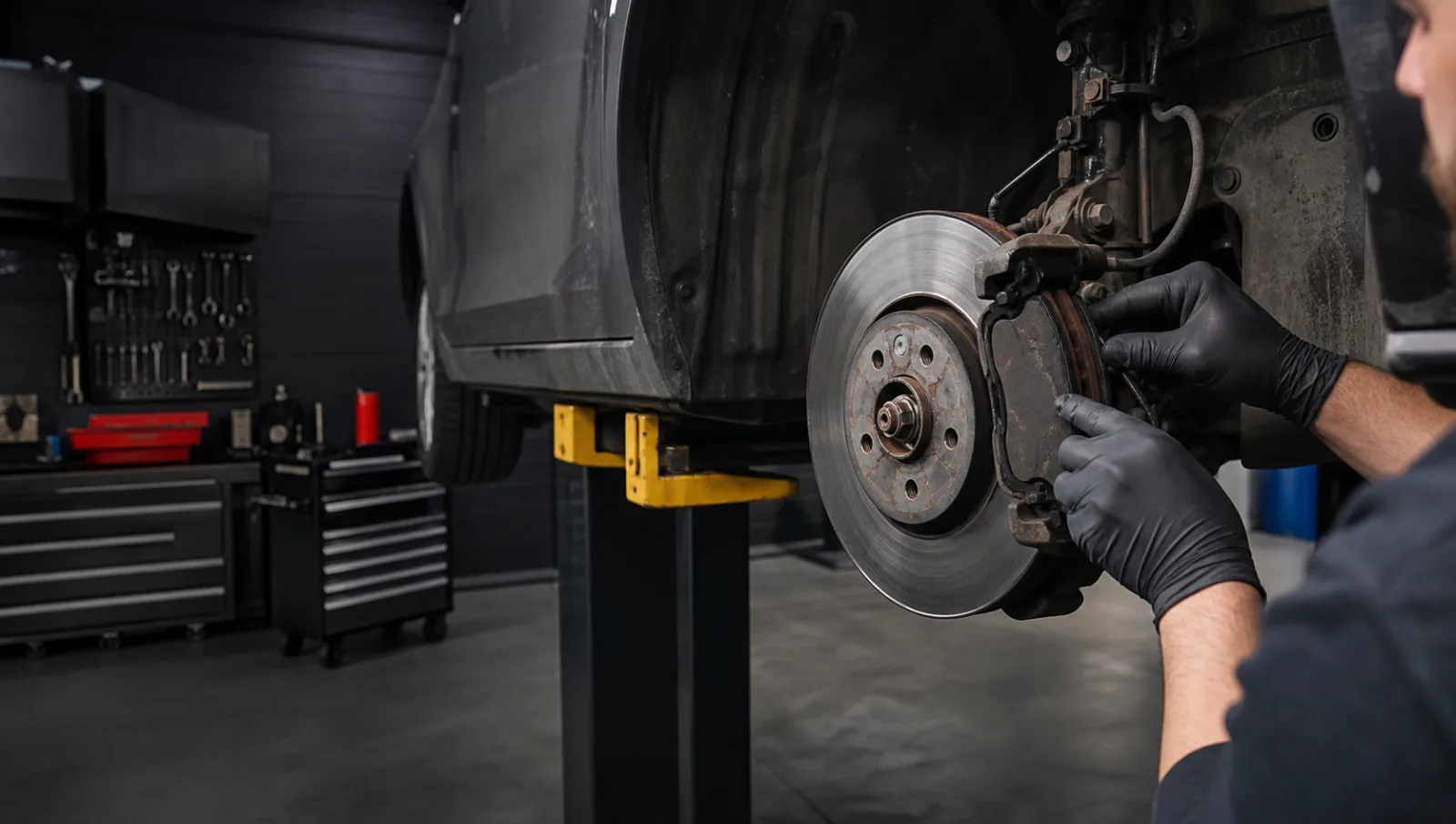
A mechanic inspecting a brake disc and caliper with the wheel removed.
Brake symptoms

Describe the change

Noise, vibration and pedal feel point to different questions

Record whether the symptom appears during light braking, harder stops, low speed or a longer journey. Mention dashboard warnings and any recent tyre, suspension or brake work.

  • Grinding, squealing, clicking or a new mechanical sound.
  • Pulling, vibration or steering movement under braking.
  • A pedal that feels different, travels farther or responds unevenly.
Safety first

Do not use an online checklist to prove the brakes are safe

A visual glance cannot assess the whole braking system. If stopping distance, control or pedal response has changed significantly, stop using the vehicle and arrange appropriate inspection or recovery.

  • Treat a red warning or fluid loss as urgent.
  • Do not road-test a vehicle that feels unsafe.
  • Tell the operator if the car cannot be driven to the workshop.
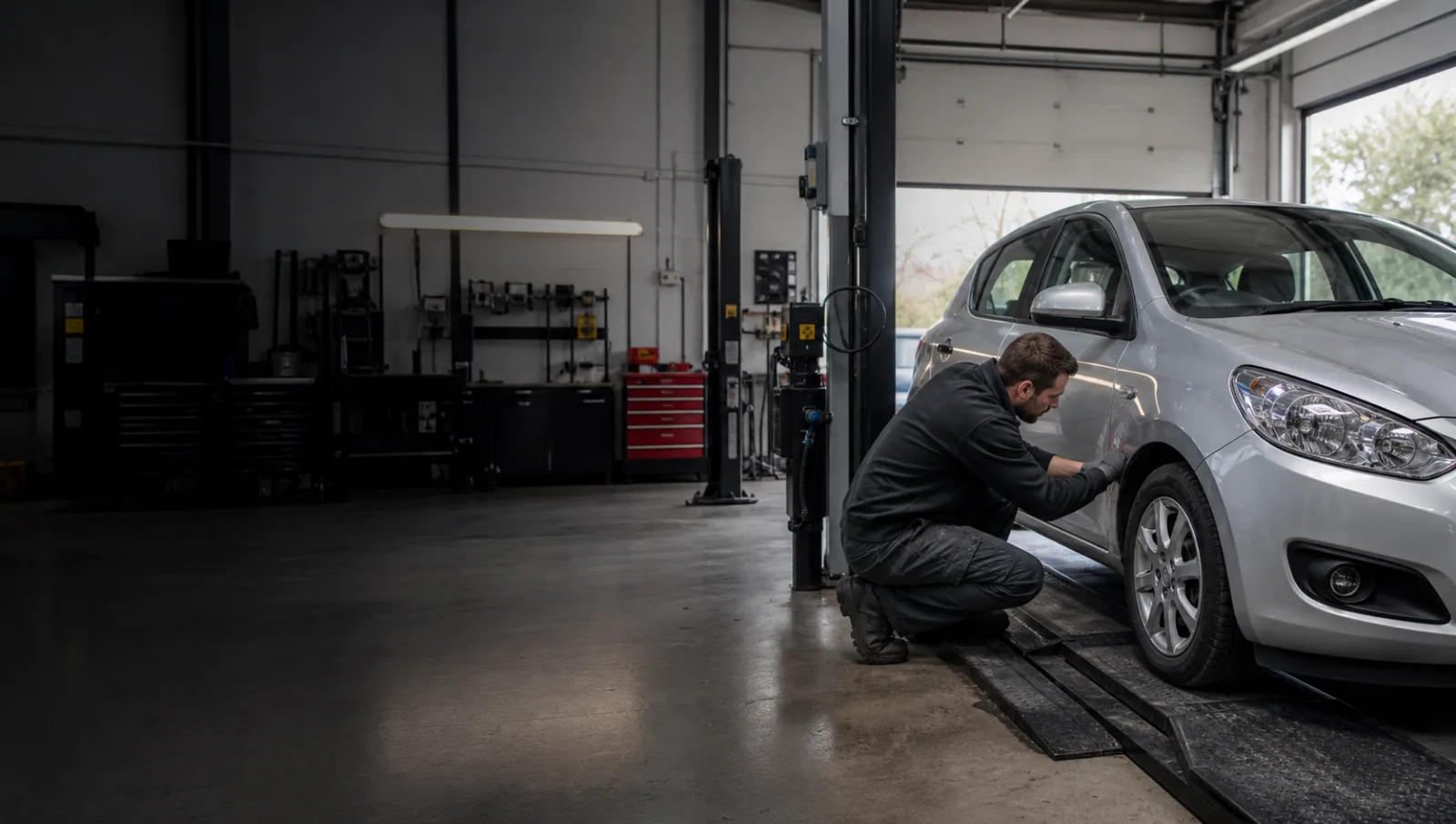
A mechanic inspecting a silver hatchback in a modern independent workshop.
Safety boundary
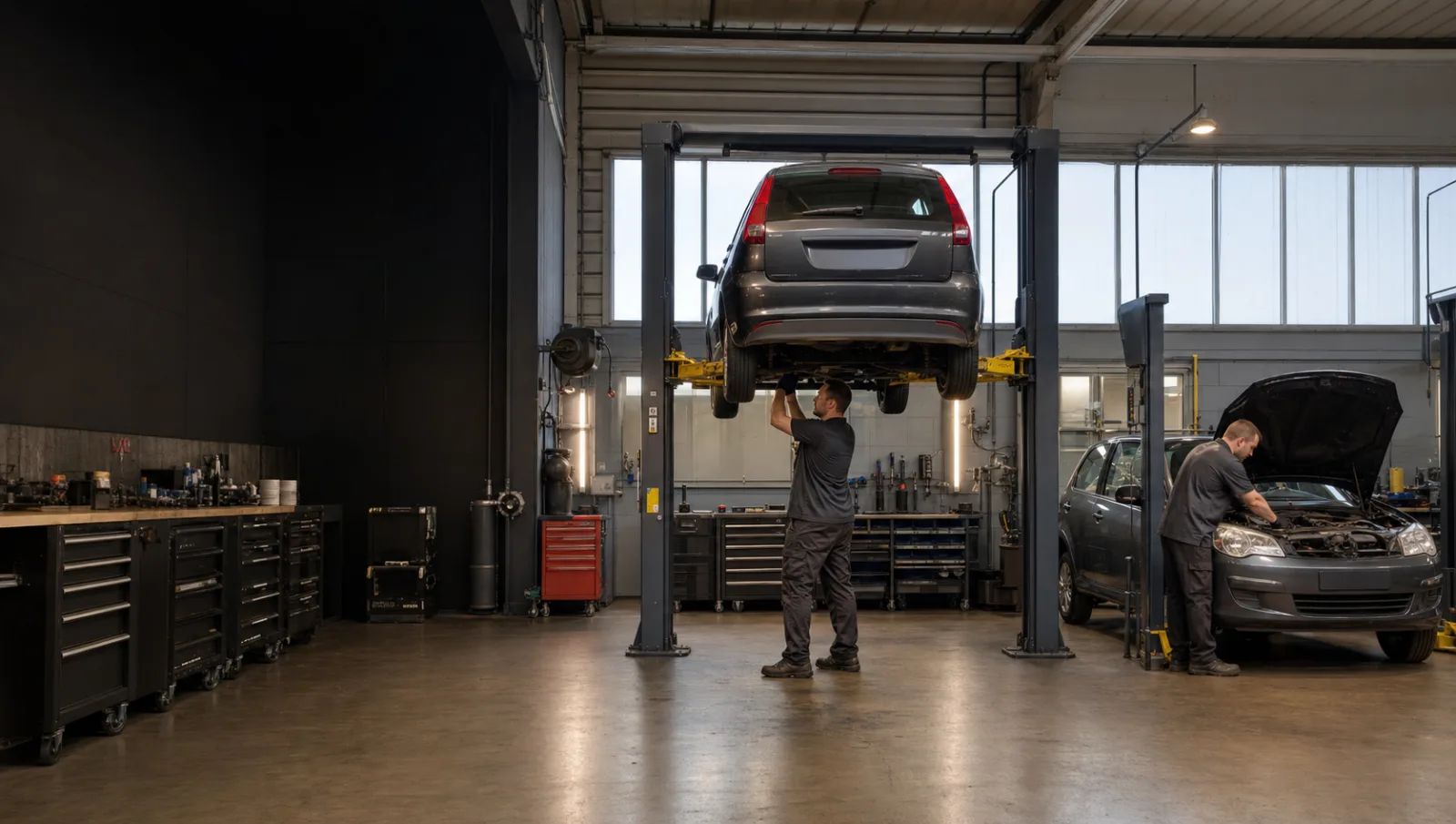
Two cars being worked on in separate bays inside an organised workshop.
Evidence

Inspection scope

Ask which components and measurements support the recommendation

Pads and discs are only part of the system. The operator may need to assess condition, wear, operation, fluid, hoses and related components before defining the repair.

  • Separate observed wear from the source of the symptom.
  • Ask whether work is recommended by condition or schedule.
  • Confirm axle, part and labour scope in the estimate.

After repair

Confirm the handover advice for the parts actually fitted

Any bedding-in, recheck or driving advice should match the completed repair and parts used. Raise an unexpected noise, warning or change in braking with the operator rather than assuming it is normal.

  • Keep the invoice and parts information.
  • Ask what should change immediately and what may settle.
  • Know how to report a concern after collection.
A mechanic discussing a blank inspection sheet with a customer.
Handover

Questions

Useful answers before the next step

What brake symptoms should I mention?

Include warning lights, noise, pedal feel, vibration, pulling and the conditions in which the change appears.

Can you tell from a noise which part needs replacing?

Not reliably from a description alone. Inspection is needed because different conditions can sound or feel similar.

Should front and rear brakes be replaced together?

The operator should recommend scope from the vehicle design, condition and measurements. Do not generalise from another car or repair.

Can I drive with a brake warning light?

This demo cannot assess that remotely. If braking safety is uncertain, stop driving and seek appropriate garage or recovery help.

Are brake prices fixed?

No. Vehicle specification, parts, condition and labour scope need to be confirmed before a real price is published or agreed.

Next step

Prepare the details before requesting an appointment

Request an appointment